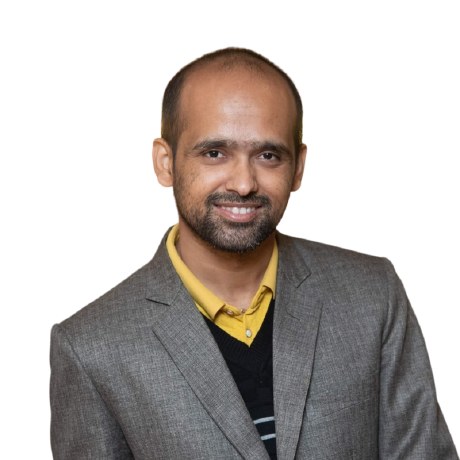
Raj Kumar Subedi

Raj Kumar Subedi

BPH · MPH · PhD in progress

Doctoral student in epidemiology and Graduate Research Assistant, School of Public Health, Georgia State University, Atlanta.

About

I am a public health researcher with more than fifteen years of experience applying epidemiological and biostatistical methods across academia, research, and national public health programs. My current work centers on mathematical modeling of infectious diseases, epidemic forecasting, and excess mortality estimation. Earlier in my career I worked on maternal and child health, health disparities, and program evaluation, often with multidisciplinary teams across several countries.

Education

2025 – present
PhD, Public Health (Epidemiology)
Georgia State University, School of Public Health, Atlanta, GA
2009 – 2011
Master of Public Health
B. P. Koirala Institute of Health Sciences, Dharan, Nepal
2005 – 2008
Bachelor of Public Health
Nepal Institute of Health Sciences, Kathmandu, Nepal

Experience

2025 – present
Graduate Research Assistant
School of Public Health, Georgia State University, Atlanta, GA

Excess mortality estimation, mathematical modeling of infectious disease, and geospatial analysis.

2020 – 2025
Research Consultant
Bhaskar Tejshree Memorial Foundation, Kathmandu, Nepal

Analysis of intervention study data and co-authorship of resulting publications.

2018 – 2019
Research Manager
Bhaskar Tejshree Memorial Foundation, Kathmandu, Nepal

Coordinated two school-based public health interventions.

2017 – 2018
Monitoring and Evaluation Manager
Nepal Public Health Foundation, Kathmandu, Nepal

Led monitoring and evaluation across the organization's public health projects.

2016 – 2017
Outcomes Specialist
St. Jude's Recovery Center, Atlanta, GA

Patient outcomes, claims data, client satisfaction surveys, and grant writing support.

2011 – 2015
Lecturer
Central Institute of Science and Technology, Pokhara University, Kathmandu, Nepal

Taught undergraduate epidemiology, biostatistics, and research methods.

Selected publications

  1. 2026 Subedi RK, Mamelund SE, Delgado I, Matute I, Laborde CC, Joaquin-Damas E, Chowell G. Poverty and ethnic patterns in COVID-19 excess mortality: evidence from Chile, 2020–2022. American Journal of Epidemiology, 195(4):1136–1146.
  2. 2024 Subedi RK, VanderZanden A, Adhikari K, Bastola S, Hirschhorn LR, Binagwaho A, Maskey M. Integrated Management of Childhood Illness implementation in Nepal: understanding strategies, context, and outcomes. BMC Pediatrics, 23(Suppl 1):645.
  3. 2024 Ntawukuriryayo JT, VanderZanden A, Amberbir A, Teklu A, Huda FA, Maskey M, Sall M, Garcia PJ, Subedi RK, Sayinzoga F, Hirschhorn LR. Inequity in the face of success: understanding geographic and wealth-based equity in success of facility-based delivery for under-5 mortality reduction in six countries. BMC Pediatrics, 23(Suppl 1):651.
  4. 2024 Binagwaho A, VanderZanden A, Garcia PJ, Huda FA, Maskey M, Sall M, Sayinzoga F, Subedi RK, Teklu AM, Donahoe K, Frisch M. Cross-country analysis of contextual factors and implementation strategies in under-5 mortality reduction in six low- and middle-income countries, 2000–2015. BMC Pediatrics, 23(Suppl 1):652.
  5. 2023 Vatsa R, Ghimire U, Sapkota S, Subedi RK. Spatial distribution of stunting and wasting in 6–59 month children in Nepal: analysis using a Bayesian distributional bivariate probit model. Journal of Nutritional Science, 12:e25.
  6. 2022 Acharya K, Dharel D, Subedi RK, Bhattarai A, Paudel YR. Inequalities in full vaccination coverage based on maternal education and wealth quintiles among children aged 12–23 months: further analysis of national cross-sectional surveys of six South Asian countries. BMJ Open, 12(2):e046971.
  7. 2021 Dahal S, Luo R, Subedi RK, Dhimal M, Chowell G. Transmission dynamics and short-term forecasts of COVID-19: Nepal 2020/2021. Epidemiologia, 2(4):639–659.
  8. 2021 Acharya K, Subedi RK, Dahal S, Karkee R. Basic emergency obstetric and newborn care service availability and readiness in Nepal: analysis of the 2015 Nepal Health Facility Survey. PLOS ONE, 16(7):e0254561.
  9. 2021 Lama Yonzon C, Padmawati RS, Subedi RK, Paudel S, Ghimire A, Murhandarwati EH. Exploring determinants of hydrocele surgery coverage related to lymphatic filariasis in Nepal: an implementation research study. PLOS ONE, 16(2):e0244664.
  10. 2020 Conway K, Akseer N, Subedi RK, Brar S, Bhattarai B, Dhungana RR, Islam M, Mainali A, Pradhan N, Tasic H, Thakur DN. Drivers of stunting reduction in Nepal: a country case study. The American Journal of Clinical Nutrition, 112:844S–859S.

Open-source software

R · CRAN

Estimation and short-term forecasting of the time-varying reproduction number.

R · CRAN

Epidemiologic measures that show every intermediate step, so students can check work done by hand. Covers 2×2 measures, stratified analysis, and Mantel–Haenszel adjustment.

Julia · General

Phenomenological growth-model fitting for outbreak data, with parametric bootstrap uncertainty, forecast scoring, and identifiability screening.

Julia · General

Complex survey analysis with Taylor-linearization variance — means, totals, domain estimation, regression, and survival models. Validated against R's survey package on NHANES and DHS designs.

Interactive tools

Causal inference

Draw a causal diagram in the browser and export dagitty code.

doi:10.5281/zenodo.20058009
Demography

Direct and indirect age standardization with editable age groups.

doi:10.5281/zenodo.20068581
Measures

Summary and diagnostic-accuracy measures from a 2×2 table.

doi:10.5281/zenodo.20135874
Biostatistics

Upload data, fit a model, and read the output alongside a plain-English reading of it.

doi:10.5281/zenodo.20148664
Epidemic modeling

Fit outbreak data to growth models and explore R₀, serial interval, and doubling time.

doi:10.5281/zenodo.20138554

Languages

Languages

R, Python, SAS, MATLAB, Julia, QGIS